

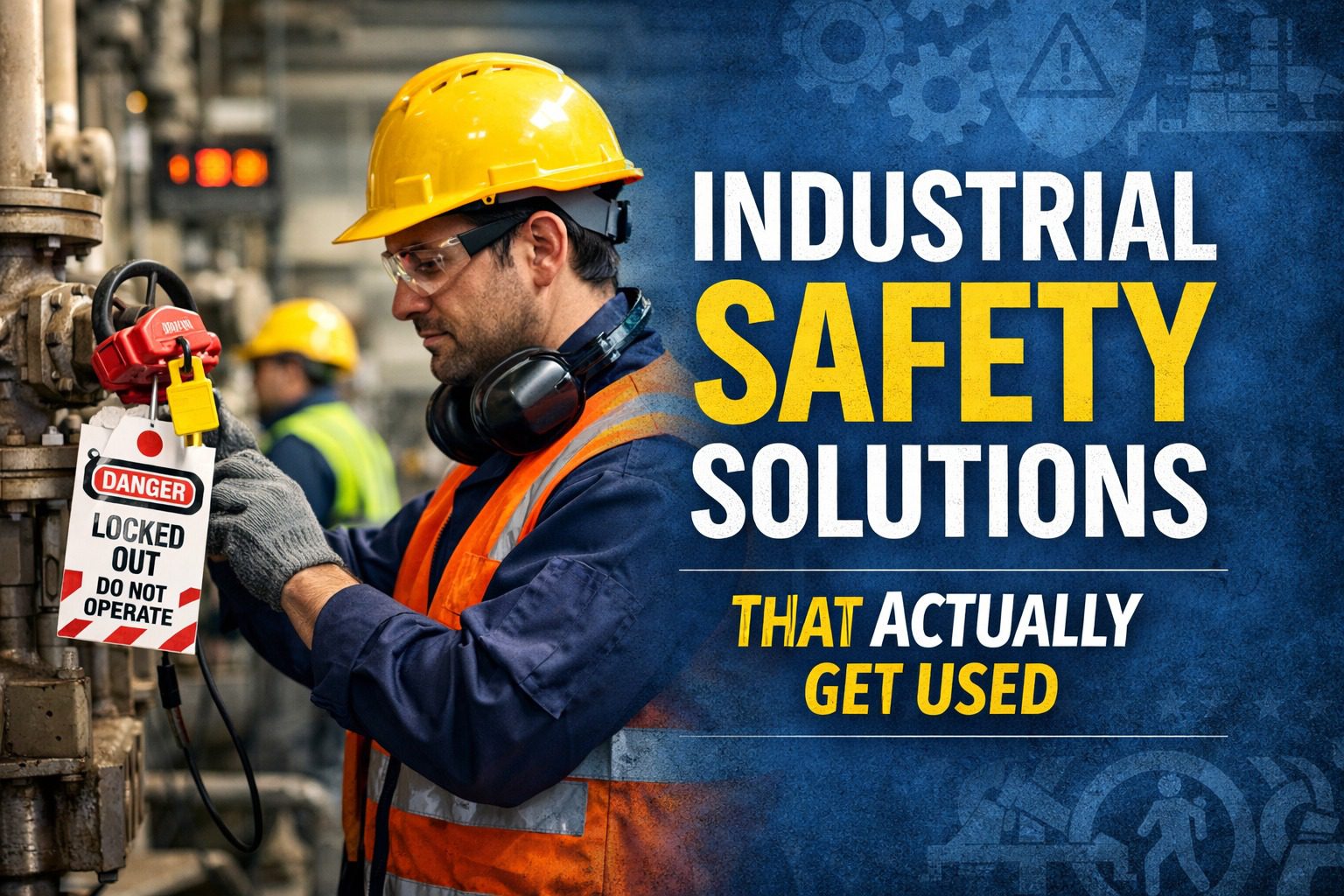
Most safety failures aren’t mysteries, they’re gaps left by missing guards, open penetrations, and messy cable runs. A straightforward mix of physical barriers and visual order takes a big bite out of those risks. In this guide we walk through proven controls and illustrate them with products from Intrepid Industries, a supplier of industrial safety gates, toeboard systems, safety hooks, and other polyurethane gear built for harsh work environments. For OSHA basics on openings and edges, see toeboards should be at least 3½ inches high with secure fastening and minimal bottom clearance.
1) Fall-protection gates at ladder tops and platforms
Openings at the top of vertical ladders and catwalk access points are classic exposure spots. Intrepid’s universal double-bar safety gate is a self-closing polyurethane gate used to block those openings and cut fall risk. It fits common guardrails and mounts to angle, flat bar, plate, pipe, or square tube with basic hardware.
Why crews like them
- Self-closing swing action, no need to remember a latch.
- Durable in wet or chemical-wash areas.
- Hardware options that match the rails already on site.
2) “Protect your holes”: toeboards and floor-opening control
Any time people work above others, dropped objects become a hidden hazard. Around floor penetrations, pipe sleeves, conduit clusters, ladder openings, toeboards and collars keep tools from taking the quick route to the level below. OSHA’s rule of thumb is clear: toeboards should be at least 3½ inches high and securely fastened, with only minimal clearance at the bottom. The board needs enough strength to resist impact from falling objects.
Where this matters most
- Scaffold decks and mezzanines during install or demo
- Pipe racks and tank farms with frequent penetrations
- Fabrication platforms where small parts and fasteners sit near edges
Intrepid offers toeboard links and collars that wrap penetrations and integrate with grating, handy when work layouts change week to week.
3) Cable safety hooks: order that prevents trips and snags
Trailing cords, air lines, and welding leads create trip points and snag hazards for lifts and carts. Cable safety hooks route those lines above head height or along guardrails so aisles stay clear and housekeeping checks get faster. A simple walk of a pallet-jack path followed by hanging every cable that crosses it produces immediate results.
4) Why polyurethane?
Polyurethane components tolerate abuse, moisture, and many cleaners, and they don’t rust. That combination makes them a strong fit for washdown rooms, coastal refineries, food processing, and outdoor construction where metal parts corrode or seize. Intrepid builds gates, toeboards, and accessories from polyurethane with sizes and brackets aimed at common guardrail and grating layouts.
5) Fit-out playbook for three work sites
Site
Typical risks
Useful controls
Warehouse & distribution
Mezzanine edges, ladder access, pallet drop-zones, stray cords
Self-closing gates at every ladder, toeboards along pick modules and around penetrations, cable hooks at charging stations.
Refinery & chemical plant
Elevated pipe racks, frequent penetrations, weather and washdowns
Polyurethane gates on platform openings, toeboard collars around pipe sleeves, bright cable hooks on handrails.
Construction sites
Temporary edges, scaffold decks, constant layout changes
Portable toeboards and collars for holes, scaffold caps and gates where crews pass through often.
6) Fast checks you can run this week
- Walk every ladder top. Any opening without a gate gets flagged for a self-closer.
- Circle every floor penetration. Holes larger than a tool head need covers or toeboards; log dimensions and pick the right collar.
- Follow the cords. If a wheel or a boot can catch it, reroute it with hooks.
- Spot-check toeboards. Confirm height (3½ in.), fastenings, and bottom clearance against OSHA wording.
Where to source
Intrepid Industries catalogs safety gates, toeboards, safety hooks, PPE accessories, and custom polyurethane parts, with U.S. and international distribution. If your site needs odd sizes or unusual mounting, they handle custom requests as well.
Bottom line
Great safety gear is the kind people actually use. Self-closing gates that never depend on memory, toeboards that drop into place around penetrations, and hooks that tame cable clutter, these are quiet fixes that stop falls and strikes from above. If your checklist includes edges, holes, or cords, Intrepid’s polyurethane line is a practical place to start.