

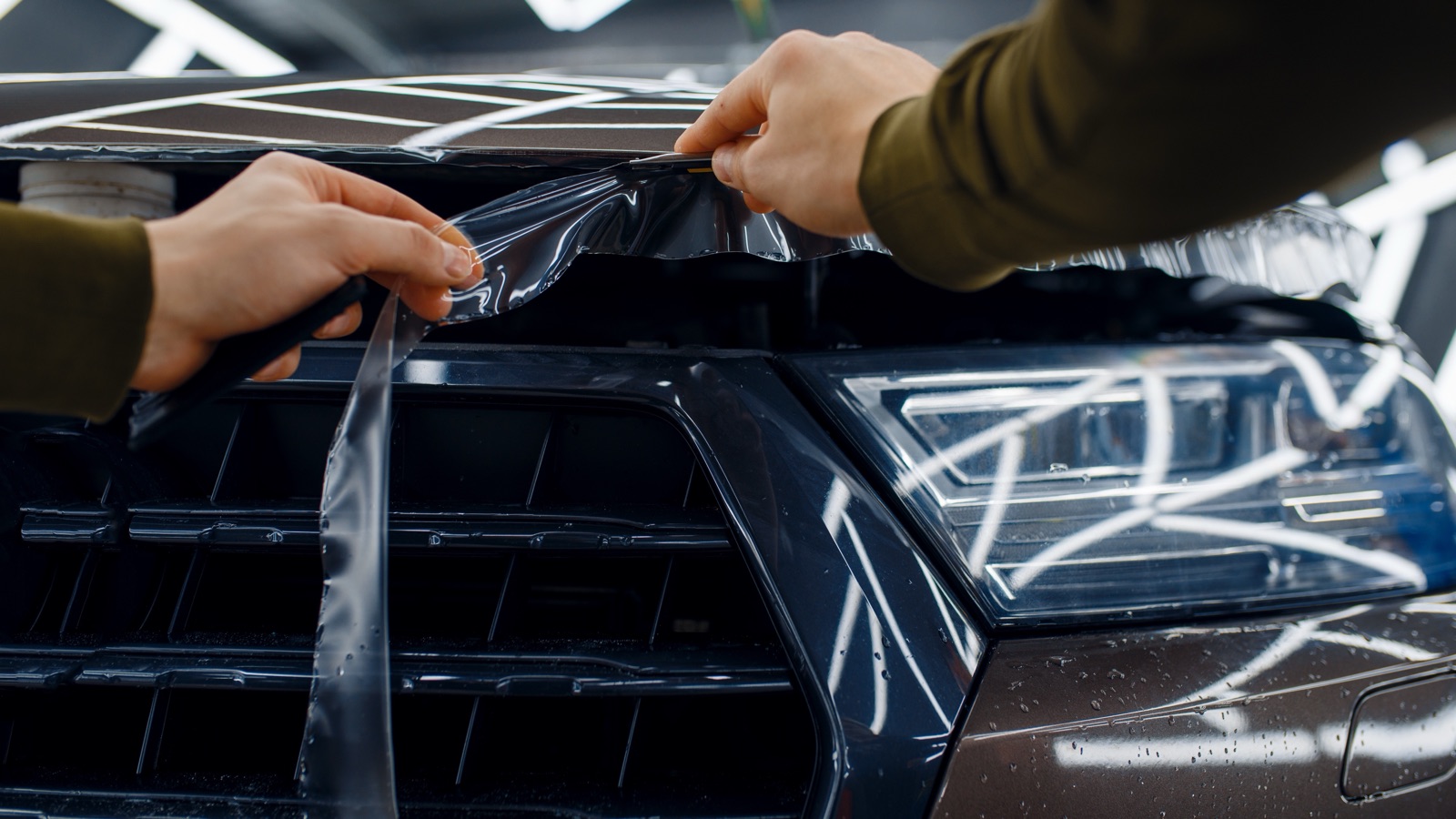
A new car’s paint is never going to look better than it does on delivery day. In Chicago, the clock on that finish starts almost immediately. Expressway gravel, pothole debris, winter brine and tight street parking all go to work on the front end and lower panels long before the first oil change.
Paint protection film, usually shortened to PPF, is the most direct way to keep that factory finish intact. It is also easy to buy badly. The film you choose matters, but how much of the car you cover and who installs it matter just as much.
What paint protection film actually does
PPF is a clear, flexible layer of thermoplastic polyurethane applied over the painted panels of a car. It takes the hit that would otherwise chip the clear coat: a stone thrown up by a truck on the Kennedy, grit from a construction zone, a careless shopping cart.
Better films carry a self-healing top layer, so fine scratches and light swirl marks fade with warmth from the sun or warm water. Most are gloss, though matte and colored films exist for owners who want to change the look of the car while protecting it.
What PPF does not do is repair damage that is already there. Film goes over the paint as it is on the day of installation, which is the main reason timing matters on a new car.
Why the first months count
Factory paint is at its best before it has seen a season of driving. Once a chip breaks through the clear coat, touch-up paint and panel refinishing rarely match the original texture exactly, and the film will simply sit on top of the repair.
Chicago adds a local twist. Salt and brine spray onto rocker panels and lower doors for months each winter, and every spring brings a fresh crop of potholes and loose aggregate. Getting film on before the car’s first winter, or its first long highway season, means protecting paint that is still perfect rather than preserving paint that already has a few marks.
How much of the car to cover
Most shops sell coverage in tiers, and the right one depends on how and where the car is driven.
- Partial front protects the areas that take the first hits: the front bumper, a strip across the leading edge of the hood and fenders, and often the headlights. It is the usual starting point for a daily driver on a budget.
- Full front extends the film across the entire hood, full fenders and mirrors. It avoids the visible line where a partial hood panel ends, and it suits cars that spend a lot of time on the expressways.
- Full car covers every painted panel. It makes most sense for high-value cars, darker colors that show every mark, and owners who plan to keep the car for many years.
In this climate, it is worth asking about the rocker panels and lower doors even on a partial package. They sit directly in the path of the slush your own tires throw up all winter.
As one local example, the Chicago installer PPF WRAP sells partial-front, full-front and whole-car packages, plus colored film. The company says its partial-front package covers the front bumper, roughly 18 inches of the hood, roughly 12 inches of the fenders and the headlights, and it lists that package from $800. Its guide to PPF for your new car walks through which panels Chicago roads hit first.
What separates a good installation from a poor one
Two cars can wear the same roll of film and look very different a few years later. The difference is almost always the installation.
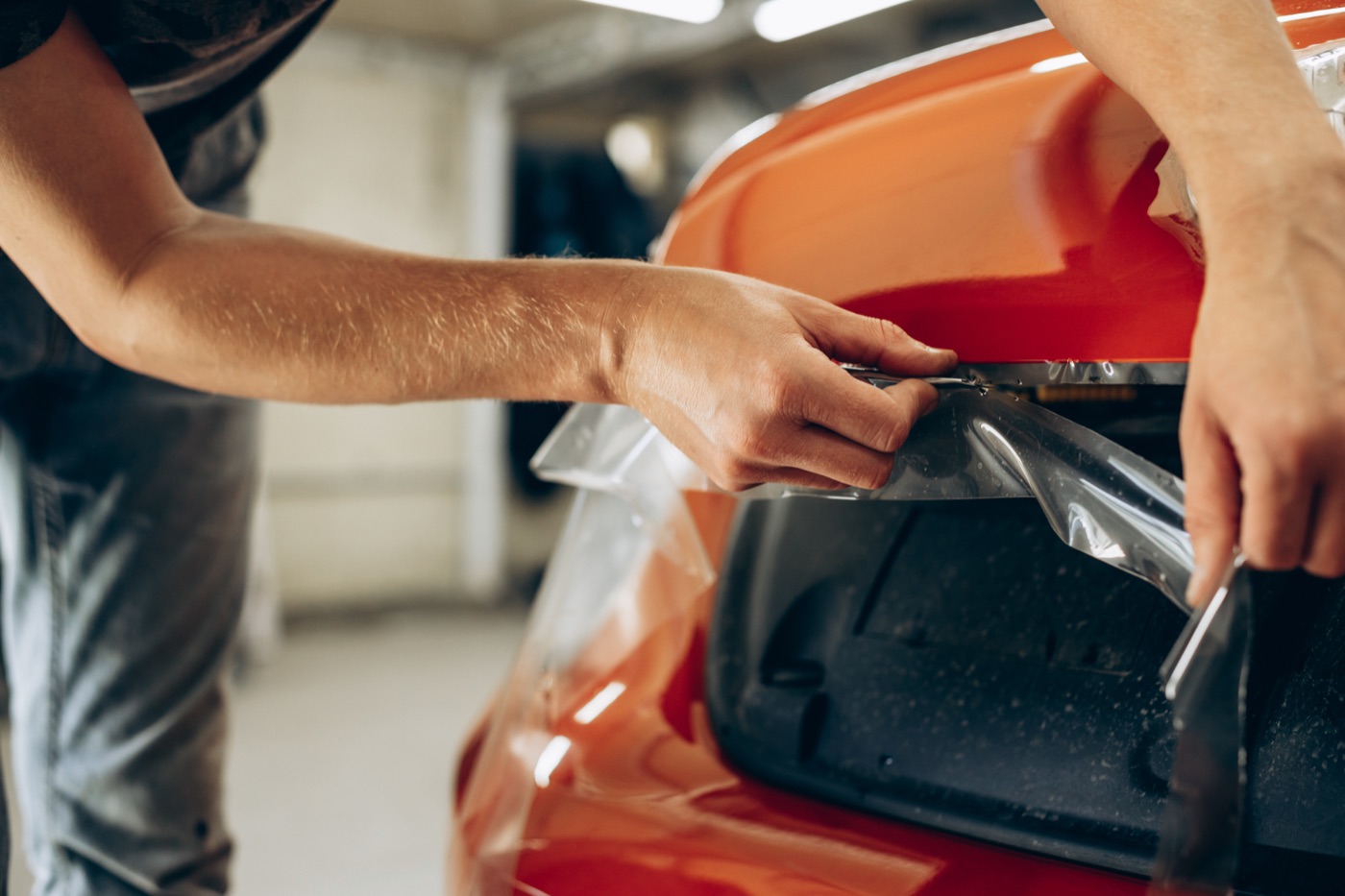
Edges. A careful installer wraps the film around panel edges and tucks it into the gaps wherever the shape allows. Film cut short leaves a visible line that collects dirt and wax, and that line is usually where lifting starts.
How the film is cut. Many shops cut film from digital templates on a plotter, matched to the exact make and model. Others trim on the car with a blade. Ask which method a shop uses, and if they trim by hand, ask how they avoid cutting into the paint underneath.
Preparation. Anything left on the paint stays under the film for its whole life. Good shops wash and decontaminate the paint, clay it, and correct any light defects before the film goes on. PPF WRAP, for example, says every one of its packages includes a decontamination wash, clay treatment and paint correction.
The finish on pickup. A few small moisture pockets in the first days are normal and usually clear on their own as the film cures. Large trapped bubbles, a cloudy or frosted look, or edges that are already lifting on the day you collect the car are signs of a rushed job.
Film first, ceramic coating second
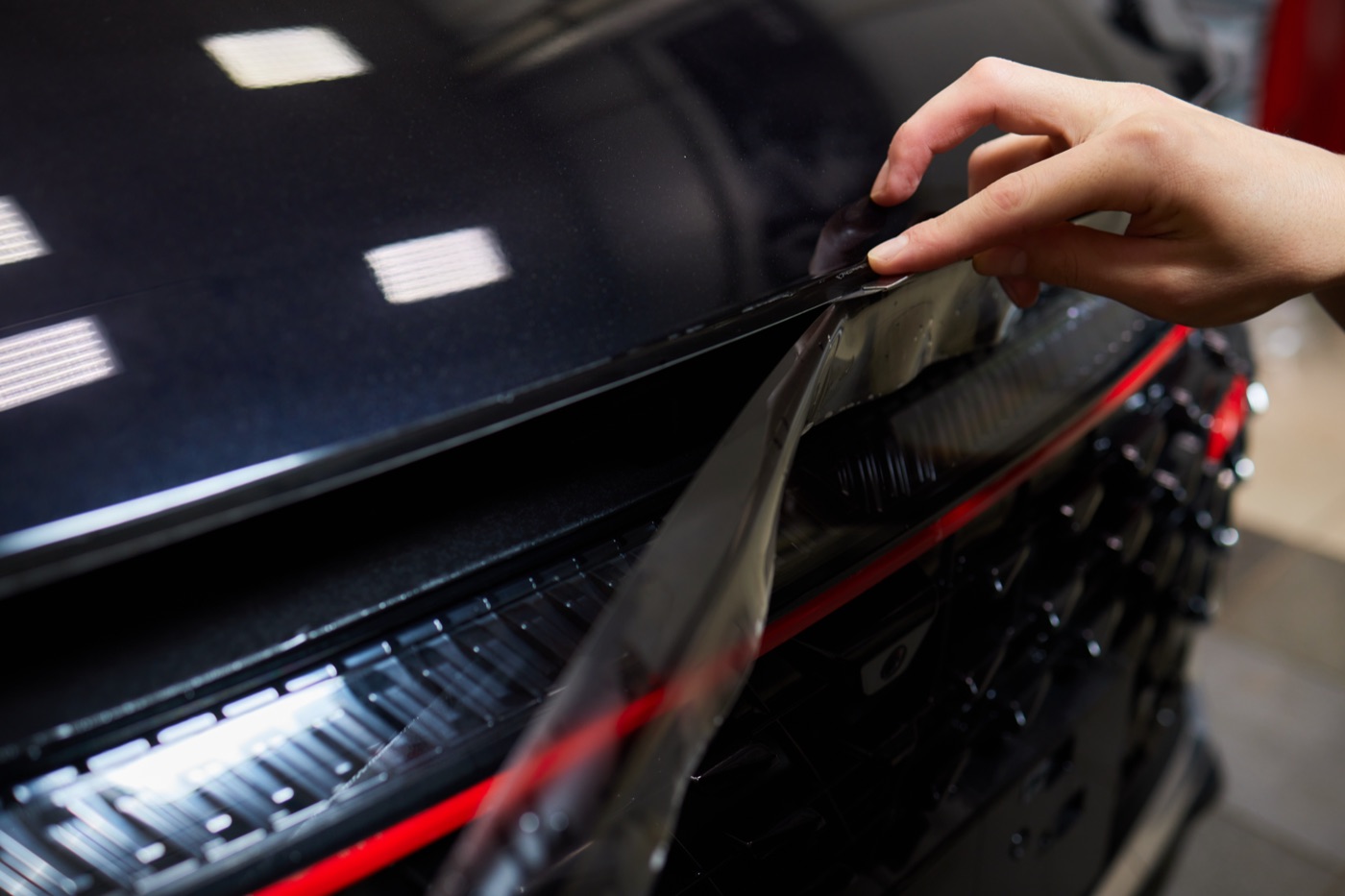
Many new-car owners want both film and a ceramic coating. The order matters. Film needs to bond directly to the paint, and a ceramic coating makes the surface too slick for the adhesive to grip properly. The usual sequence is film first, then ceramic over the film and the rest of the car, which adds gloss and makes winter washing easier. PPF WRAP describes the same order on its own site.
If the budget only covers one of the two, film on the most exposed panels does more to prevent chips. A coating can be added later on top.
Questions to ask before you book
- Which film brand and product line will you use, and what does the manufacturer’s warranty cover?
- Do you cut from templates or by hand on the car?
- Which edges will be wrapped, and where will there be visible seams?
- What preparation is included, and is paint correction part of the price?
- How long will you need the car, and when can I first wash it?
- Can I see a car you have finished recently?
PPF WRAP lists film from brands including XPEL, 3M, STEK, LLumar, Avery Dennison, SunTek and KAVACA, and advertises a 10-year warranty. Whichever shop you choose, get the warranty terms in writing and check whether they come from the film maker, the installer, or both.
Caring for new film
Film needs a short time to settle. Installers typically ask owners to wait several days before the first wash and to avoid pointing a pressure washer at the edges. After that, regular hand washing with a pH-neutral soap is enough for most cars, and brushless washes are gentler than automatic brushes. Rinsing salt off the lower panels during winter helps the film and everything around it.
The bottom line
For a new car in Chicago, the best time to add paint protection film is before the damage starts. Match the coverage to how you drive, choose an installer as carefully as the film itself, and ask to see finished work before you book. If you are also comparing detailing shops for ongoing care, our guide to the best auto detailing services in Chicago is a good place to start.